Downloads

In addition to the continuing education courses of Priv.-Doz. Dr. Ahlers as well as for the lectures at the University Medical Center Hamburg-Eppendorf, you can download the course documentation here.

These documents are only intended for the participants of the respective course. Access therefore requires the respective password; you will have received this in the lecture.

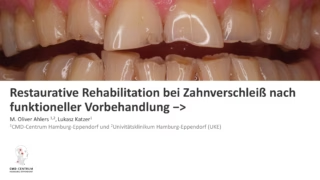
DGFDT 2026 Seminar on Tooth Wear

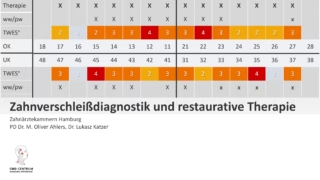
Final: DGFDT 2026: Seminar on Tooth Wear + Restorative Therapy

Dear colleagues,

I have now consolidated all the seminar materials. You can now download them in ONE file.

The basis for assessing tooth wear is the Tooth Wear Evaluation System 2.0. If you would like to read the original paper, you can find it here on our website.

The Tooth Wear Status (DGFDT) is available to you for implementation in practice. For maximum effectiveness in practice with digital patient records, my team and I developed the CMDfact module CMDbrux as a supplement to CMDstatus and CMDmanu, as well as CMDtrace for analysing movement recordings. CMDbrux transfers the recorded findings to the CMDfact Diagnosis Pilot, so that you can convert findings into a diagnosis in line with guidelines. Medically, it is much wiser to do this in the context of functional findings, which is why it makes sense for the Diagnosis Pilot to establish the diagnosis based on all findings—a smart idea by Prof. Dr. Jakstat, who conceived this visionarily and was the first to implement it. You can trial the software in your practice free of charge for 3 months. By then, you will have stably implemented the procedure (you can order it here)

I have contacted the organiser, Oemus, to ensure that they send you a certificate of attendance in each case.

If you have any questions about the content, please feel free to contact me.
Kind regards, and see you at the DGFDT conference 2027 on November 5–6, 2026 in Mainz
Oliver Ahlers

PS: The password begins with @ and is written entirely in lowercase. If you are unsure, check the DGFDT name on Instagram.

Kind regards until then
Oliver Ahlers
2026 DGFDT Newcomer Forum

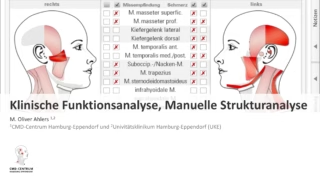
DGFDT 2026 / Newcomer Forum: Lecture on Clinical Functional Analysis and Manual Structural Analysis

Dear colleagues,

Here you will find the lecture from the Newcomer Forum at the DGFDT Annual Meeting 2026. The objective was to demonstrate when and how to perform a clinical functional analysis and what information we derive from it. In the second section, I explained the separate manual structural analysis examination, again addressing which findings are recorded and what information and how we derive conclusions from these findings in practice. As promised at the end of the presentation, I have also added a section to the download on establishing a structured diagnosis.

For practical implementation, you will find the Clinical Functional Status form of the DGFDT on the DGFDT website or in your practice management software. You would then need to establish the structured diagnosis mentally and record it manually. In our practice, we use the CMDfact software developed by Prof. Jakstat and myself, featuring the CMDstatus and CMDmanu modules, and then formulate the structured diagnosis by point-and-click in the CMDfact module Diagnose-Pilot. (There is a 3-month trial version!) This is faster, and according to a study from the University Medical Center Hamburg-Eppendorf, the quality of the results is significantly better. Ultimately, what matters is not the tool, but that it works well in your practice (:-).

If you have any questions about the content, please feel free to contact me.
Kind regards
Oliver Ahlers

PS: The password begins with @ and is written entirely in lowercase. If you are unsure, check the DGFDT name on Instagram.

2026 DGFDT Transfer of jaw position OA

DGFDT 2026: planning jaw position in restorative therapy for tooth wear

Dear colleagues,

As promised, you can find the complete lecture from the DGFDT conference of the Working Group for Functional Rehabilitation and Reconstruction (AKFRR) here. I outlined which parameters should be considered in which sequence when planning restorative follow-up treatment for patients with pathological tooth wear. You will find the decision-making process at the end of the post.

The basis in each case is the assessment and diagnosis of the tooth wear. For this, you could use the DGFDT Tooth Wear Status, or, as we do, the CMDbrux module in the CMDfact software. The module transfers the findings to the CMDfact Diagnosis Pilot, where you can record the diagnosis in compliance with guidelines.

If you have any questions about the content, please feel free to contact me.
Kind regards
Oliver Ahlers

PS: The password begins with @ and is written entirely in lowercase. If you are unsure, check the DGFDT name on Instagram.

Orthodontic follow-up treatment after functional therapy

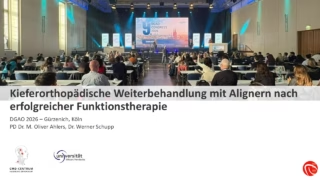
DGAO 2026 in Cologne: Orthodontic follow-up treatment after functional therapy

Dear colleagues,
as promised, please find attached the presentation from the Gürzenich in Cologne, supplemented—as suggested live by Dr. Schupp—with the topic of CMD screening using the scientifically validated CMD short assessment.

Lots of fun and success with the implementation!

Kind regards
Oliver Ahlers

LinkedIn: PD Dr. M. Oliver Ahlers | LinkedIn
Instagram @Ahlers.CMD

PS: Here is the link again for the successful course by Dr. Schupp, Dr. Chhatwani and Paul Grunau at Crocodile:
Crocodile – Dental Online Continuing Education.

In addition, the ZÄK Hamburg offers a Curriculum Function, which I lead; there is still 1 spot available in 2027: Curriculum Function, CMD and Bruxism: Continuing Education.
Simone Wegemann from the Chamber looks forward to your call. All courses take place in HH-Eppendorf, with the Dorint**** right next door. The course is VAT-free and we train everything practically.

And if you are interested in an individual course offer, please feel free to get in touch…

2026 Sleep Medicine: Guideline-Compliant and Practice-Oriented

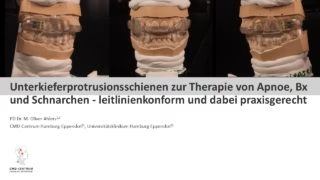
Curriculum Funktion ZÄK HH: Slides on mandibular advancement splint therapy from this weekend’s course

Dear colleagues,
please find enclosed the promised slides on guideline-compliant therapy with mandibular advancement splints.
The corresponding information and examination forms can be found under dentaConcept : Forms : Advanced Diagnostics, and as part of the CMDform software you will find them here.
For ordering an occlusal splint in compliance with the Medical Devices Act (MPG), the easiest option is to use this form: dentaConcept : Forms : Advanced Diagnostics
All of this can be ordered at dentaConcept : Publishing : Order Page.

Best regards,
Oliver Ahlers

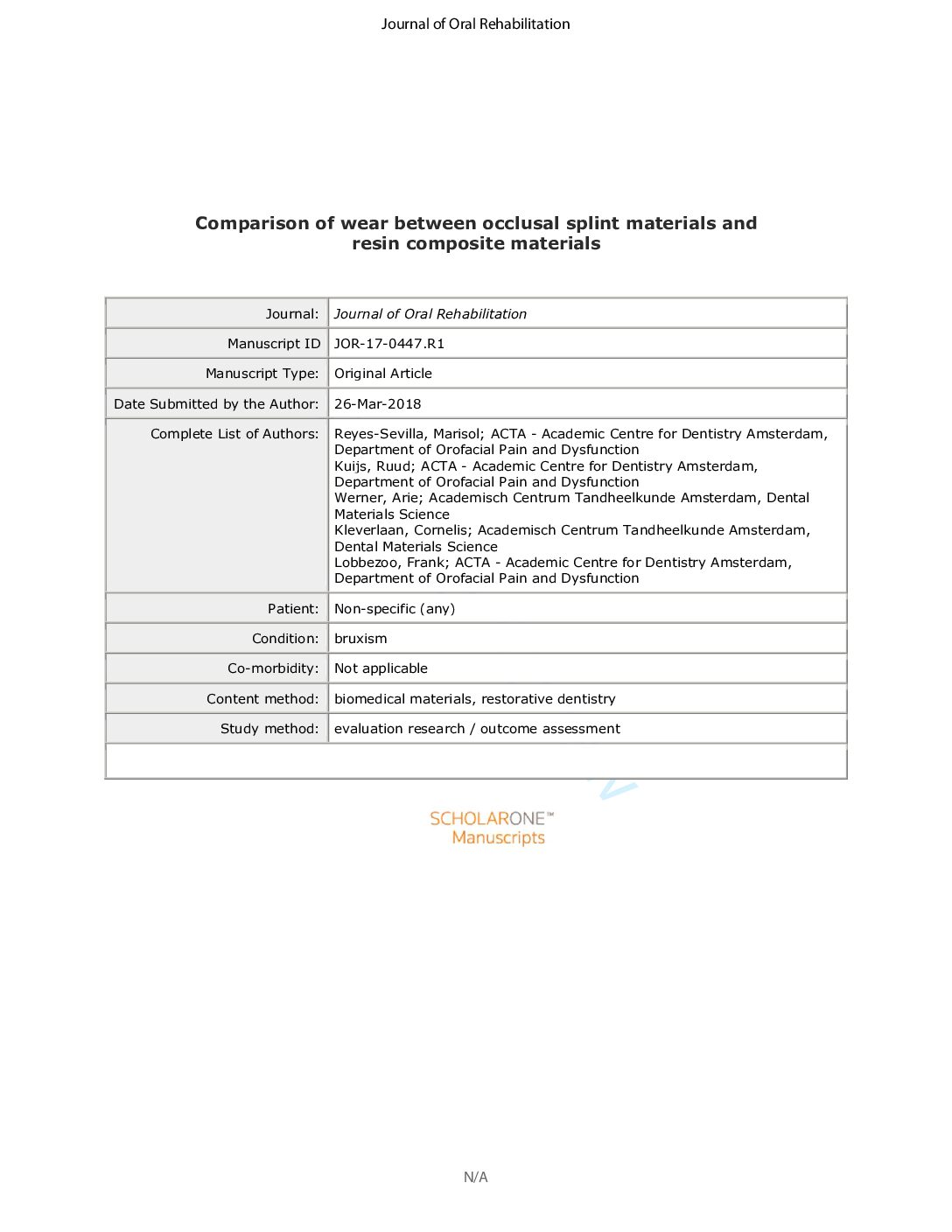
Preview: 2018 Reyes-Sevilla; Lobbezoo JOR uncorrected proof

Study on the abrasion resistance of powder-layered, milled, and 3D-printed splints

Hello everyone,
Please find attached the first of the two studies. This one will suffice. Please note: This is the revised draft, not the final version. The text has been improved, the data are correct, and they contain the key finding that the 3D-printed splints are significantly harder than conventional ones.
Enjoy reading and thank you for your interest.

Oliver Ahlers

_BoNT application in Dentistry

Course on Botulinum Toxin for CMD and Bruxism in Neuroanatomy at the UKE

Dear colleagues,

As promised, here are all the slides from the Botulinum Toxin in Dentistry course for download, so you can review the content. Attention: This version from October 31, 2026, includes new anatomy slides, new ultrasound images from new handheld devices, and, following the course on October 30, typical injection points marked with crosses for individual therapy based on patient complaints during ultrasound-controlled injection. I have also integrated the use of CMDforms. As announced, I have prepared the file as a handout with 2 slides per page, making it clearer for you yet still easy to read.

I described the indication algorithm to you during the course. For implementation in your practice, proceed as follows:

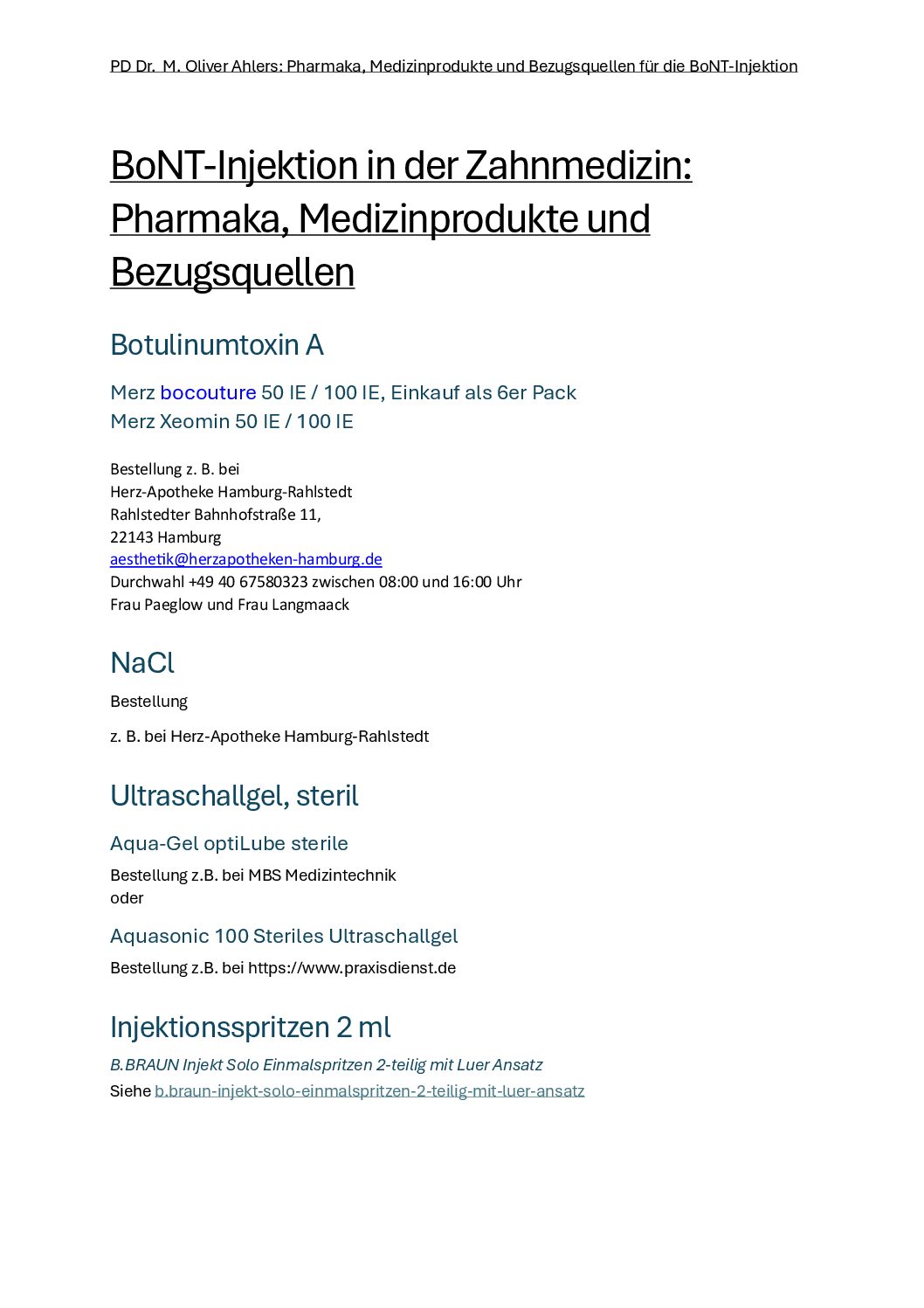
Last but not least, you will find the materials list in the download entry on this website below.

Good luck with the implementation!

Oliver Ahlers

P.S. The password is the code number of the cadaver on which we practiced the injection under ultrasound guidance, 4 digits without slashes or hyphens.

Preview: _BoNT application in dentistry_Materials

Material list for the course Botulinum Toxin in Dentistry in the Neuroanatomy Department of the UKE on October 9, 2026

Dear course participants, here you will find the promised “material list” including sample sources of supply, plus—by way of an extension—sample patient record entries and billing information. Also included are tips for recording the relevant findings, the link to the informed consent form (in paper format, which allows the consent form to be sent in advance with the HKP and reviewed together at the treatment appointment), and the software required to record and evaluate the underlying findings.

Good luck with it! If you have any questions: Kundenbetreuung@dentaConcept.de

Oliver Ahlers

Preview: 2026 IFG Timmendorf Dental Summer - Slide Handout

Download for the course in Timmendorf at Dental Summer on July 18, 2026

Dear course participants from the course “CMD Expertise Compact: Functional Diagnostics and Therapy According to the Eppendorf Concept” in Timmendorf at the Dental Summer

As promised, here you will find all the slides presented in Timmendorf available for download. I projected the password for you on-site—first letter capitalized, the rest lowercase!

To deepen your knowledge and put it into practice, I gave you further tips, here are the corresponding links:

Deepening your knowledge:

It was very nice with you, thank you for the numerous contacts on Instagram: Ahlers.CMD.

Best regards

Oliver Ahlers

Preview: _CMD10a ZV Course Program-Course Slides

Online Course on Tooth Wear Diagnostics (Saxony Dental Association)

Dear colleagues,

As promised, here you will find all the slides from the lecture of the course for the Saxony Dental Association for download. I heard that this entry was not visible for some devices, so I have re-uploaded it and, by way of compensation, included additional slides that there was no time for during the online course. The password is the one announced in the course; it relates to your hometown, first letter capitalized, the rest lowercase. As announced, I have prepared the file as a handout, always with 2 slides per page, making it clearer for you yet still easy to read.

For implementation in your practice, I have left the QR codes in the presentation and also included a few clickable links.
First of all, the DGFDT findings sheets are important for you, as the tooth wear screening and tooth wear status are officially recognized as high-level scientific services. The same applies, by the way, to manual structural analysis as a supplement to clinical functional analysis; someone asked about that during the discussion. Here is that link: DGFDT / DGZMK findings sheets.

To ensure economic efficiency in practice, it is important that the German Dental Association has formally recognized the three services Bruxism Screening Index, Tooth Wear Screening, and Tooth Wear Status as independent services. You can find them in the Analog List in Section J.

For implementation in the digital practice, you can find the various software modules here:

  • Clinical functional analysis for the digital practice, recordable with CMDfact, CMDstatus module,
  • Bruxism Screening Index (BSI), digitally recordable with CMDfact, CMDbrux module.
  • Establishing a structured diagnosis based on the data recorded in CMDfact with the DiagnosePilot module.
  • Effective and legally secure patient information with a guideline-compliant informed consent form
  • -> Software and patient information forms can be ordered here.

And if you would like to deepen your knowledge through further training of this kind, you can find offers under Continuing Education – CMD-Centrum Hamburg-Eppendorf.

Wishing you much success with the implementation and warm regards up the Elbe from Hamburg!

Oliver Ahlers

Preview: 2026 LZK BW Lake Constance Meeting ZFA

Lecture at the 61st Lake Constance Meeting of the Tübingen District Dental Chamber – for dental assistants

Dear dental assistants,

As promised, I am providing the slides from my lecture here as a PDF. You will find 2 slides per page to help you recap the lecture content.

You can also do this online; the use of the software for bruxism screening and dental wear screening is described here in short tutorials by me: dentaConcept : Software : CMDbrux

Good luck with the follow-up – and have a sunny week!
Oliver Ahlers

Screenshot_FilmIntro

Eppendorf Centric Registration Templates – Manufacturing Instructions V.1 (no password)

Below you will find illustrated instructions for the dental fabrication of the Eppendorf centric registration template. Please note that this illustration reflects the status of the first edition of the workbook “Restorative Dentistry with the Artex System”. Compared to these instructions, three important details were improved with the publication of the second edition of the book in 1998:
– three additional stops on the upper side of the plate regio 12-22 as “tilt indicators”
– marking of the upper midline on the plastic plate
– posterior stops on the upper side in the molar region on the last molars!
These three changes considerably improve the usability of the plate registrations. Therefore, please be sure to inform your dental technician of these changes. The second edition of the book is also available again.

Screenshot_2025-03-24_at_00-21-23_Microsoft_Word_-_Befundbogen_Kondylenpositionsanalyse_-_Anleitung_final.doc_-_Befundbogen_Kondylenpositionsanalyse_-_Anleitung_final.pdf

Condylar position analysis findings sheet: instructions for completion

During condylar position analysis, the findings are recorded on the condylar position measuring instrument using corresponding color markings. The labels are then removed and transferred to a condylar position analysis measurement sheet. These instructions explain in detail how to complete the form.

Screenshot_2025-03-24_at_00-20-03_CMF_13_04_Ahlers.indd_-_CMF13_4_Ahlers_SCREEN__final_.pdf

Optimized procedure for condylar position analysis (no password)

Issue IV 2013 of the Journal of Craniomandibular Function (CMF) published an article on the optimized procedure for condylar position analysis. If you are not a subscriber, you can find it here and also on this page.

Screenshot_2025-03-24_at_00-18-59_Kondylenpositionsanalyse_-_Instrumente__Rechtslage___Abrechnung-15092019.pdf

Implementing condylar position analysis in practice (no password)

Understanding the relevance of condylar position analysis is easy, but implementing the procedure requires the right tools and knowledge of the legal situation and billing principles. In this short guide you will find everything summarized once again.

Screenshot_Titelfolie

Trick film on the preparation of ceramic inlays (no password!)

In addition to the publication in Int J Comp. Dent. I have developed animated films with my colleagues Dr. Blunck, Prof. Frankenberger, Dr. Hajto and Prof. Pröbster that show the procedure for preparing ceramic inlays. I also showed these in the seminar. Dr. Hajto was responsible for turning them into animations. A compilation of some of the films shown in the lecture is freely available on the Internet. Click on this link. The films have been produced in a manufacturer-neutral manner. Komet Dental has requested and received permission to show the appropriate grinders and is posting the film on the Internet, but is neither the author nor the client of the film – just to give you an idea of how it works.

Yours, Oliver Ahlers

Screenshot_2025-03-24_at_00-12-14_IJCD094_Ahlers_-_IJCD_Ahlers_4-2009_9_final_PUBLISH-29042015.pdf

Publication on the preparation of ceramic inlays and partial crowns (no password)

Dear students,
Thank you very much for your attentive interest during my seminar. I promised you access to the original publication describing the set of rules that I presented to you in the seminar and in the script. You can download the paper here by clicking on the title. And if you want to know how often it is cited in Researchgate alone, click here…

Screenshot_2025-03-24_at_00-16-00_Quintessenz_Journals_-_qi_2024_07_s0518_Ahlers_et_al._-_Survival_of_occlusal_PMMA-Veneers.pdf

Study on the durability of semi-permanent PMMA occlusal veneers

Certain situations require treatment with restoration of the tooth contours, the tooth volumes and the corrected (re-)adjustment of the jaw joints to a physiological position. Such treatments are rare and extremely difficult because they require the complete – and correct – adjustment of the jaw position in a single step, without overloading the body’s ability to adapt. This is all the more challenging if the patient has an increased sensitivity to changes in tooth contact. The procedure was developed around the 2000s in Hamburg and Munich, with the core element of recontouring all teeth in non-occlusion with a physiological temporomandibular joint position in ONE step using indirect restorations – and then replacing these in groups with prepared dental ceramic restorations in a later step. The results of a study on the durability of this material from…

Thumb

Lecture explaining the use of CMDfact and all modules (no password)

Dear participants,
To explain how to use CMDfact, I have given you a presentation explaining its functions. CMDfact contains various modules, including CMDstatus and CMDpain, which you already know, and extension modules that were not included in the workshop; we use all of them in our practice. As promised, you will find a description. Further information can be found here. Have fun! Oliver Ahlers